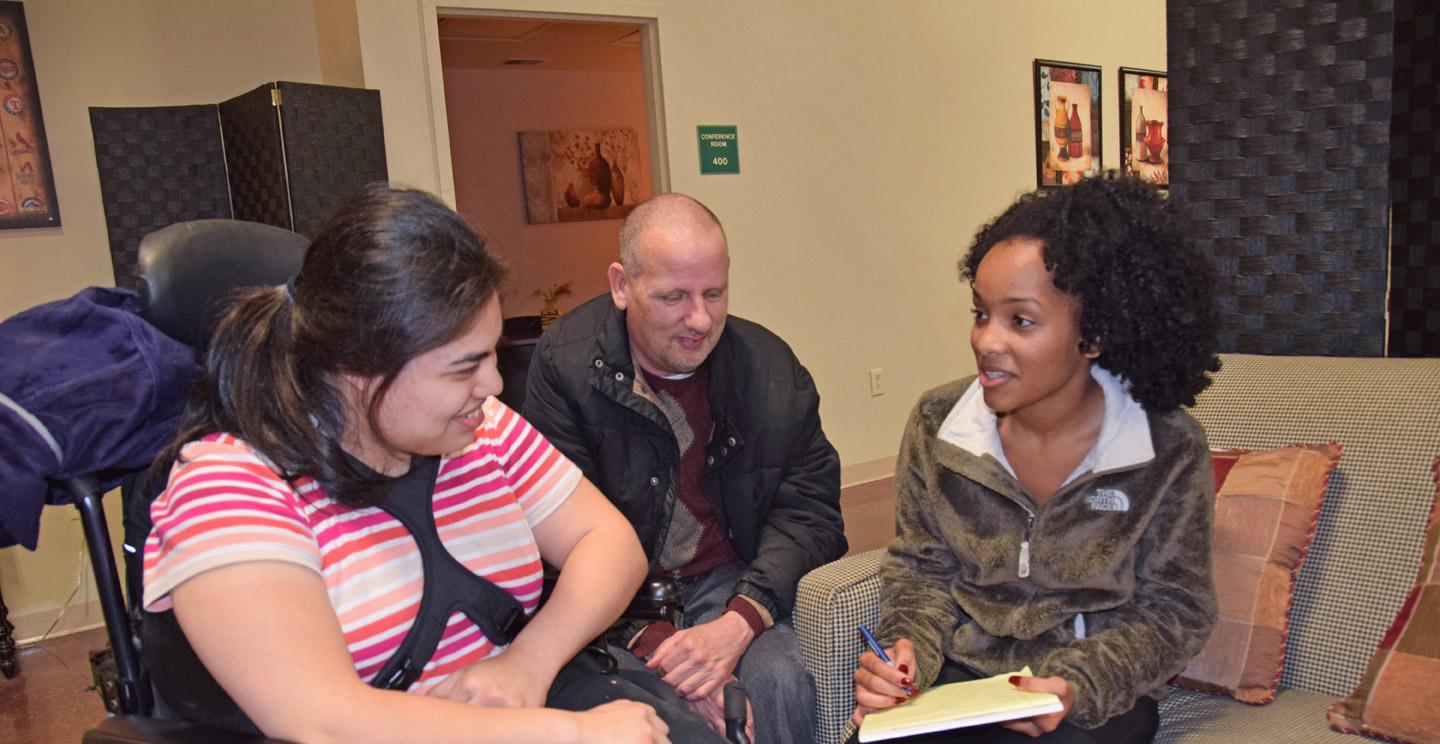
Social work is a profession devoted to helping people function the best they can in their environment. Social workers are people who care about people who want to make a difference.
The Vision of the School of Social Work
The School of Social Work's Vision is to disrupt global systems of oppression and advance human well-being through effective, efficient, and empowering social work grounded in ethical and social justice frameworks.
SU’s social work program began in 1974 to serve the needs of Maryland and the neighboring states, and since then it has grown to include the dual-degree program with the University of Maryland Eastern Shore in 1990 and a new Master of Social Work Program launched in 2001. In 2006, we expanded to include regional programs at Cecil College Northeast campus, the Eastern Shore Higher Education Center at Chesapeake College and the University System of Maryland at Hagerstown campus and in 2013 to the University System of Maryland at Southern Maryland in California, Maryland. All of SU's undergraduate and graduate social work programs are fully accredited by the Council of Social Work Education, a must for earning licensure.
The School of Social Work’s Mission is to be student-centered and dedicated to excellence in the education of professional social workers at the baccalaureate and master’s level. The school is committed to the pursuit of social and economic justice and will provide leadership through professional development, service, consultation, and research to strengthen society while contributing to the expansion of social work knowledge.
Learn more about the programs offered by our department:
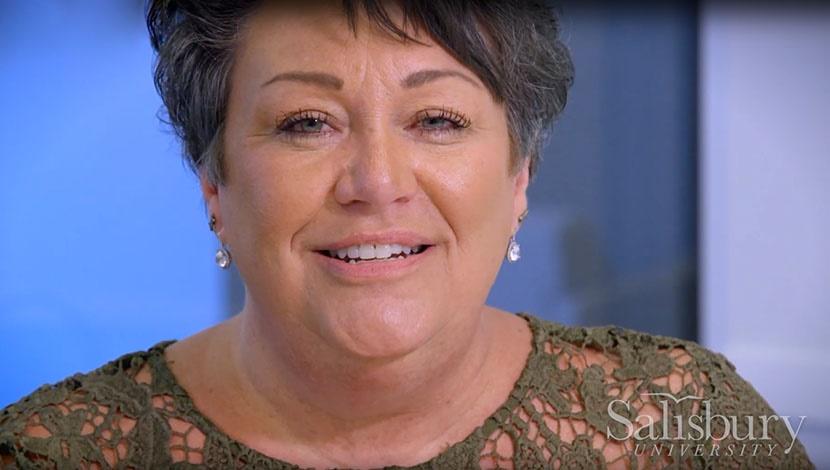
When Tylethia’s son battled addiction following a military-related injury, she decided to pursue a degree in social work at SU to make sure other veterans receive the continuity of care they so desperately need.
Social work is a profession with many different opportunities and areas, all with the common goal of helping individuals. According to the : “Social workers are skilled professionals who work to empower individuals, relieve suffering and affect social change. They are generalists and specialists who work in a wide variety of settings but apply common core values, principles and techniques.” Our programs are all accredited by the , which is essential for licensure after graduation. For more information about social work, check out Social Work Helps.
Social workers provide a wide range of services to individuals, families, small groups, communities, and organizations. Working from a strengths perspective, social workers are guided by the values of social justice and human rights. Social workers often reach out to people who may be described as oppressed and underserved.
What exactly does a social worker do? Social workers most commonly work in non-profit agencies and or government agencies. Fields of social work practice include, but are not limited to, mental health, child welfare, family work, substance abuse, adult and juvenile justice, school or medical social work, geriatric social work, homelessness and housing, domestic violence, and community organizing/development. Social work jobs can be found in various environments like schools, hospitals, communities, and other voluntary organizations. Learn more about Social Work Opportunities (PDF).
Wondering if an M.S.W. is for you? Take some non-degree seeking classes to see. Students who wish to enroll as non-degree seeking (not formally admitted to a graduate degree program) are not required to complete a formal application for admission to the department, but must complete application to the university. Non-degree seeking students may complete only the following courses: SOWK 607, SOWK 610, and SOWK 620. Students interested in the Advanced Standing Program must be admitted to the program before taking M.S.W. courses.
Is a social work degree useful? According to the Bureau of Labor Statistics, the need for social workers is expected to grow much faster than average in the next decade. In addition, there are increased opportunities for social workers who are bilingual and for social workers who want to work in rural, underserved areas.